





Leo Timmers talks here about writing and illustrating the book.
You’ve said that Kiki and Me is a more personal story than your other books
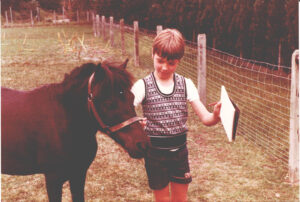

You could say there is something of me in all of the characters here: the child who got to discover the world, the horse that is left behind when Kiki grows up, and also the father who looks for a solution when the horse is left behind.
Because it’s so personal, it also has a different feel from my other books. There is still humor in it but there is also another side, which is a little bit more serious, a little more poetic. When I first stumbled upon this story, I was a little afraid of it. It didn’t feel like something I would normally make—so I knew I had to make it.
How has the book been received?
Of all the picture books I’ve made, this book has been taken really seriously. One element in the book is the passing of time, the little girl growing up. I think a lot of people really relate to that. I’ve never got so many messages from people who read the book and said they were so moved. Normally they tell me it’s so funny and they laugh and they had a good time. And here there’s another element—that they are really touched by it.
Can you talk about the way you’ve chosen to tell the story with wordless color spreads and black and white pages.
I think my big inspiration for making the book like this is Where the Wild Things Are, where you have these wordless spreads in the middle of the book. For me, when I saw that for the first time, it changed everything for me, because that meant that you can do anything in a picture book. I think this was always in the back of my mind—to do something with wordless spreads but not a wordless book.
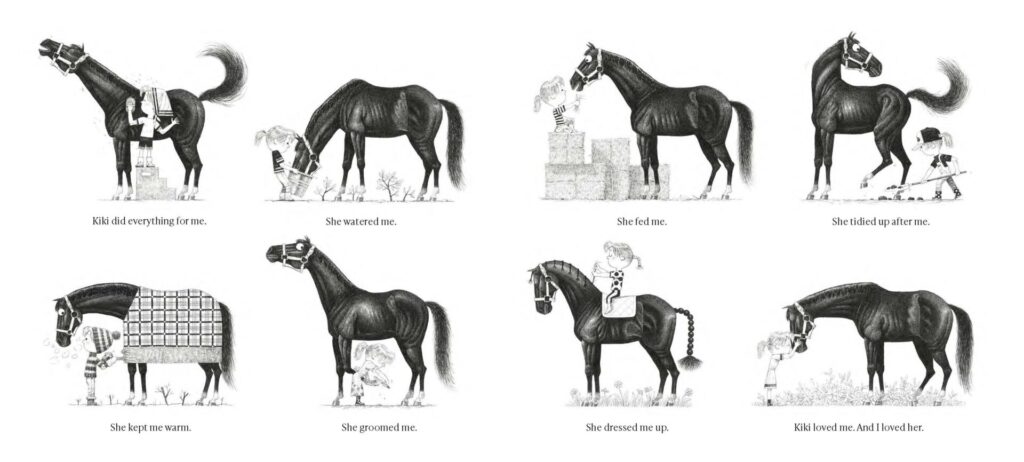
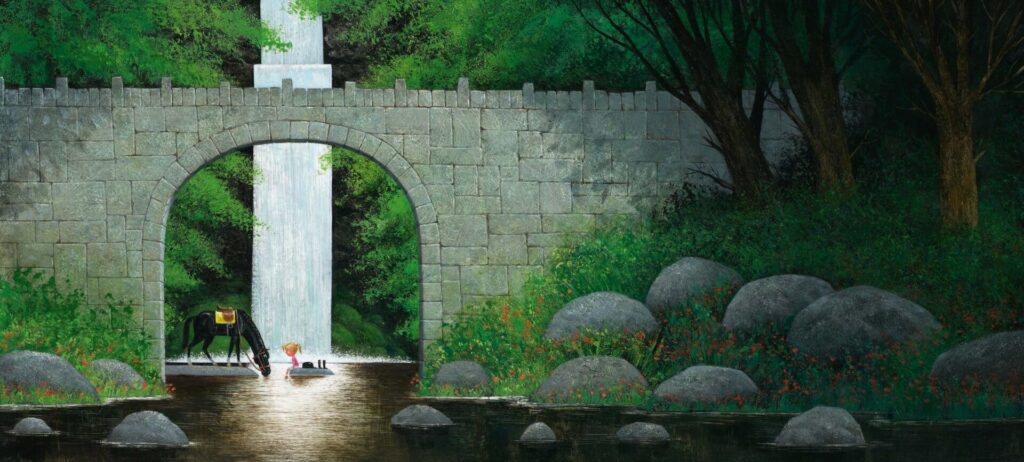
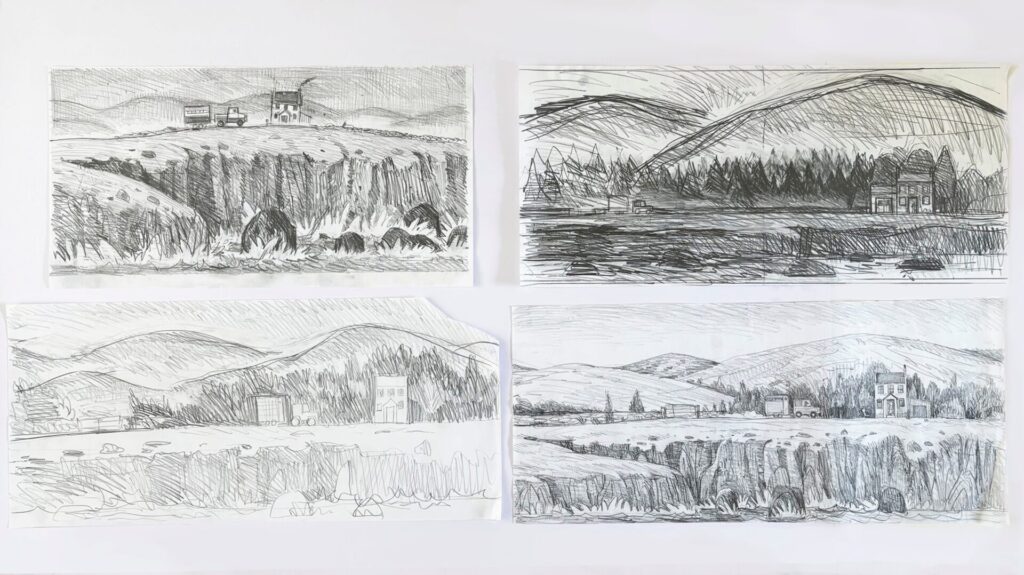
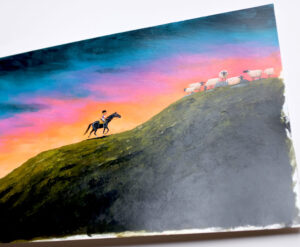
Kiki and Me has big, color landscapes without words and black-and-white pages where the story is told. The images contrast the feelings you get when you’re in nature with the intimacy between a person and a horse.
This idea came very spontaneously. In the black-and-white images we see Kiki and the horse doing things together. She’s reading her diary, whispering something in her ear. But then they also go and explore the world.

These color spreads have different landscapes and different feelings—quietness, exhilaration, things that scare, like a storm, and changing seasons. And time is passing by. We don’t feel it yet here, but Kiki, through these pages, is also getting older and older. In the last spread, they are on top of a mountain. They look down at the whale. It’s this beautiful thing they see and experience together. But also, you can feel that something is ending here. And on the next page, something has changed.
Describe your techniques
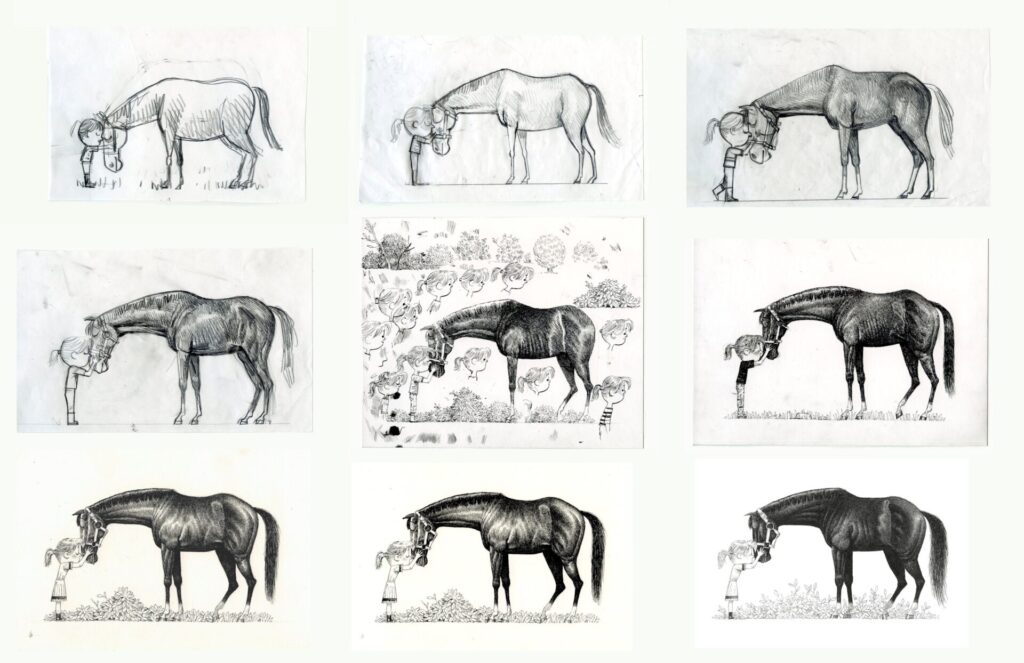
…for the black and white drawings
It took me half a year to really get into the technique of cross-hatching and drawing just in black and white. I tried graphite pencils, black pencils, experimented with painting in grey tones using acrylics. I turned to fineliners then finally tried a dip pen.

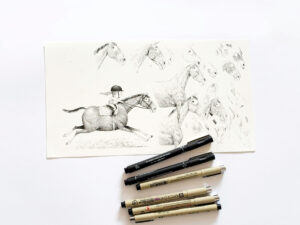
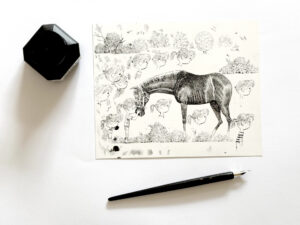
I had never attempted cross hatching before. I really worked hard on the technique. Learning how to create light, volume, and contrast was a slow process, and I had to start over again many times.
And don’t get me started on the time I spend finding the right kind of paper…

…for the color pages



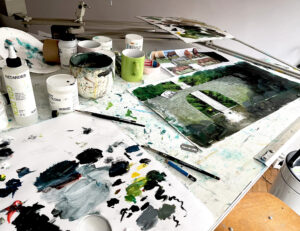
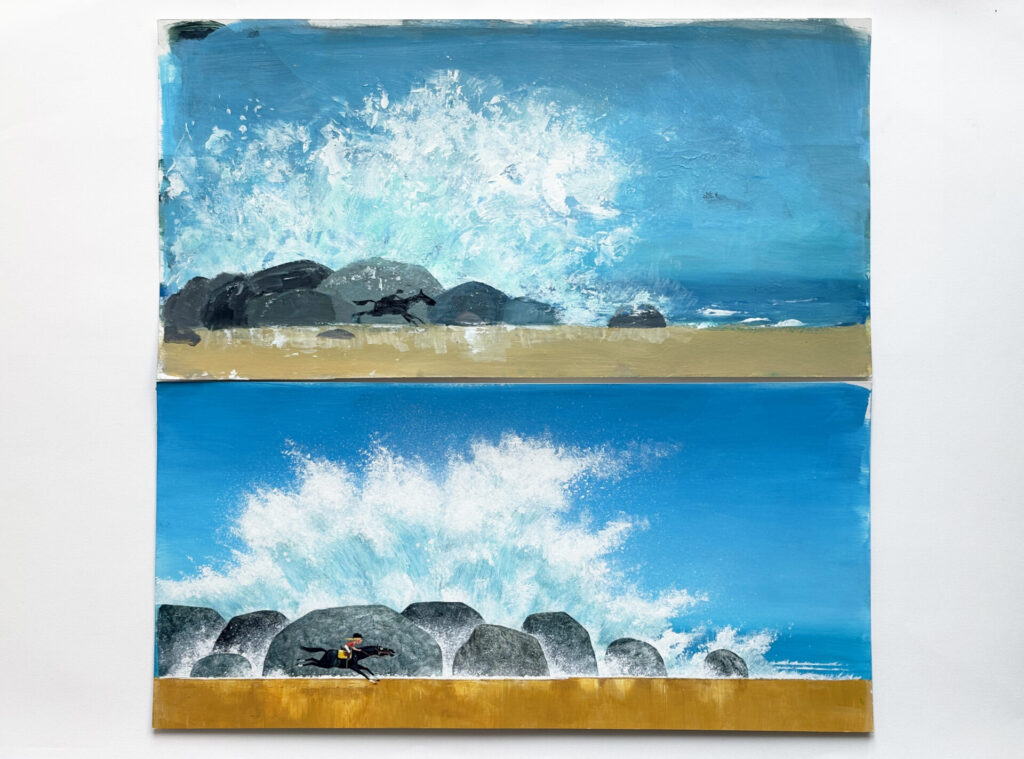
In the painting when Kiki is riding Polly along the beach, the waves are like a symbolic expression of their relationship. They are so passionate together, exploring the world. But also the sense of danger that they will encounter—and overcome because they are together. When you’re together with your best friend, you’re not afraid anymore.
It’s all done in acrylic paint. But, for example, for these waves I used, not your regular paintbrush, but sponges, a toothbrush to spray, and even a spray can a little bit. I love to experiment with all kinds of materials to get really this vibrant feeling of being alive. I use anything I can find to achieve this.

Read more about Kiki and Me and see all books by Leo Timmers published by Gecko Press.